


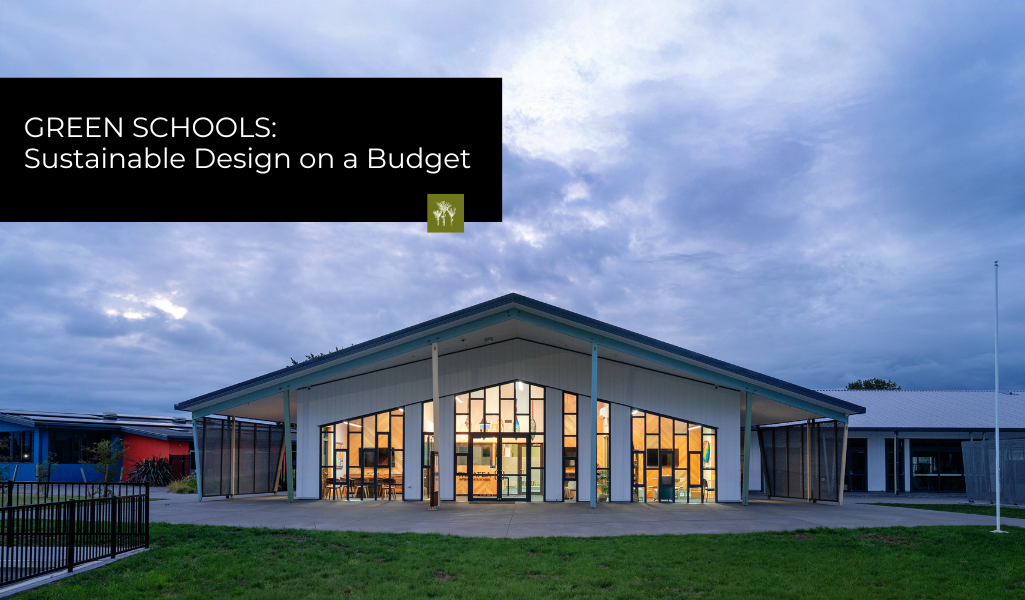
Green Schools: Sustainable Design on a Budget
There's a persistent myth in school design: that sustainability is the nice-to-have you circle back to once the budget is sorted. In our experience, that thinking gets it completely backwards. Sustainable design isn't a premium add-on, it's often the smartest way to spend limited funds, with healthier classrooms and lower running costs to show for it.
After more than two decades working with schools across Aotearoa, from large urban campuses to small rural kura, here's what we've learned about making sustainability work within the real constraints of a school budget.
Start with what the sun gives you for free
Passive design is the foundation of affordable sustainability. Orient classrooms to the north. Use thermal mass to store and release warmth.
Design for cross-ventilation.
None of these costs extra when designed in from the start, but it does require thinking carefully about a building's relationship to its site: sun angles, prevailing winds, the particular way light moves across a given piece of land. That's what good architects do anyway. The payoff is classrooms that stay comfortable year-round without relying on expensive mechanical systems to compensate for a building that's fighting its own environment.
Choose materials that work harder over time
Sustainable materials aren't about prestige finishes or architectural statements. They're about durability, low maintenance, and minimal harm - locally sourced where possible to cut transport emissions, low-VOC to keep indoor air genuinely clean, and specified to perform across New Zealand's wide range of climates. A material that lasts 40 years without replacement is almost always the greener choice. It's also almost always the cheaper one long term.
Let the building breathe, and let the light in
The research is consistent: natural light and fresh air improve concentration, reduce absenteeism, and support student wellbeing. High-level windows, clerestories, operable vents, well-positioned shading, these aren't architectural flourishes.
These are practical tools for creating classrooms where students can focus. They also happen to reduce energy bills. Good daylighting and ventilation aren't luxuries; they're what schools were designed around before we started sealing buildings shut and running HVAC systems to compensate.
Make the building part of the curriculum
A green school is more than a responsible building — it can be a teaching resource. Rainwater harvesting, solar panels, composting gardens, live building performance data: all these give students direct, tangible connections to the environmental concepts they're studying in class.
When sustainability is visible and interactive, something you can see, measure, and affect, it stops being abstract. The building becomes evidence.
Think in decades, not years
A school that costs slightly more to build but significantly less to run over 30 years is the financially responsible choice, especially in a sector where operating budgets are always under pressure. Healthier environments reduce absenteeism. Lower energy costs free up money for learning. And schools that demonstrate genuine environmental stewardship tend to earn something that can't be budgeted for: stronger community trust.
In Aotearoa, kaitiakitanga isn't a word we reach for to dress up a brochure. It reflects a genuine obligation, to act as guardians of the environment we're leaving to the next generation. Green schools are one way to honour that, and to show students what guardianship looks like in practice.
The good news? You don't need an exceptional budget. You need clear priorities, integrated thinking from the very start of a project, and a design team that understands how to make every dollar work.


